
We may not have personally tested every product. This review is based on official product information, product specifications and comparative research. It is not medical advice.
Featured products to compare
Prices and availability can change. Visit the official website for the latest information.
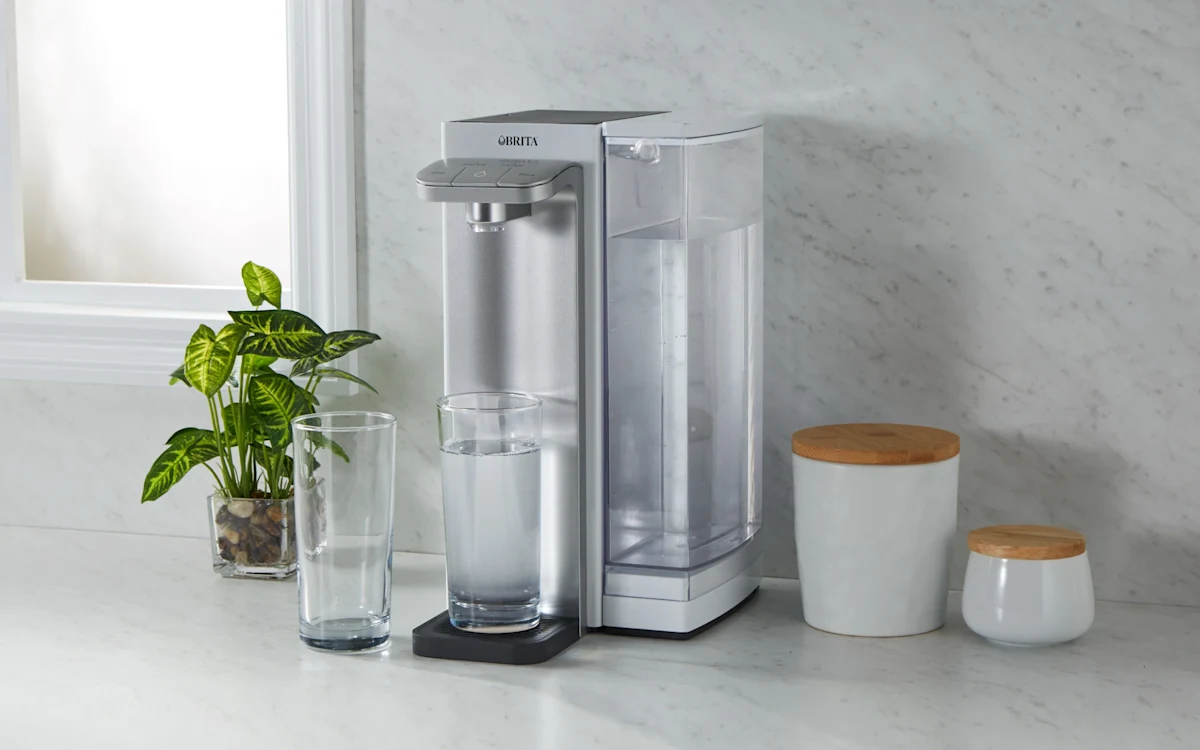
Brita Hub Countertop Water Filter System
A powered 12-cup countertop filter with preset dispensing, 120-gallon cartridge and certified reduction of more than 70 contaminants.
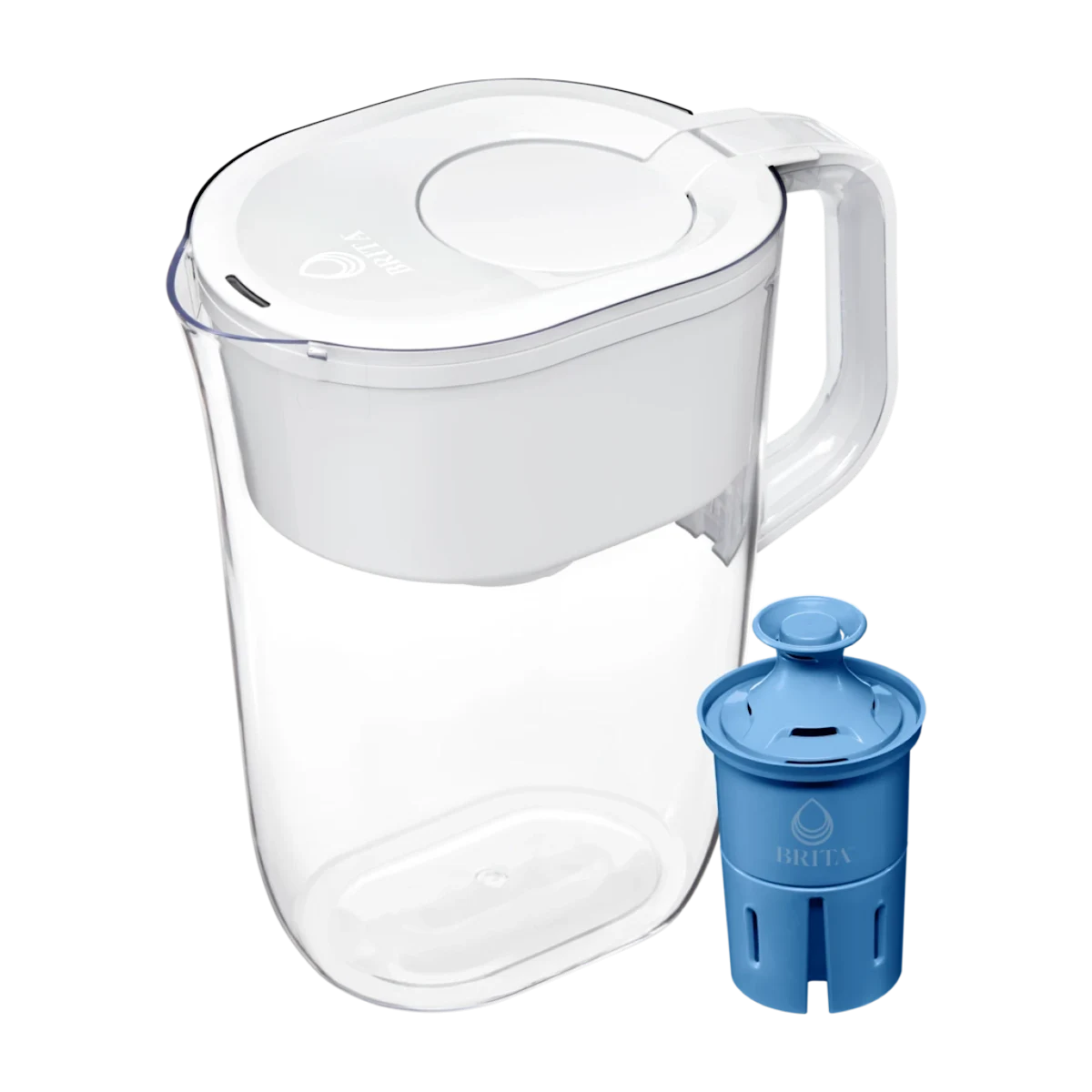
Brita Tahoe Water Pitcher with Elite Filter
A ten-cup gravity pitcher with SmartLight indicator and an Elite filter rated for 120 gallons and 99% lead reduction.
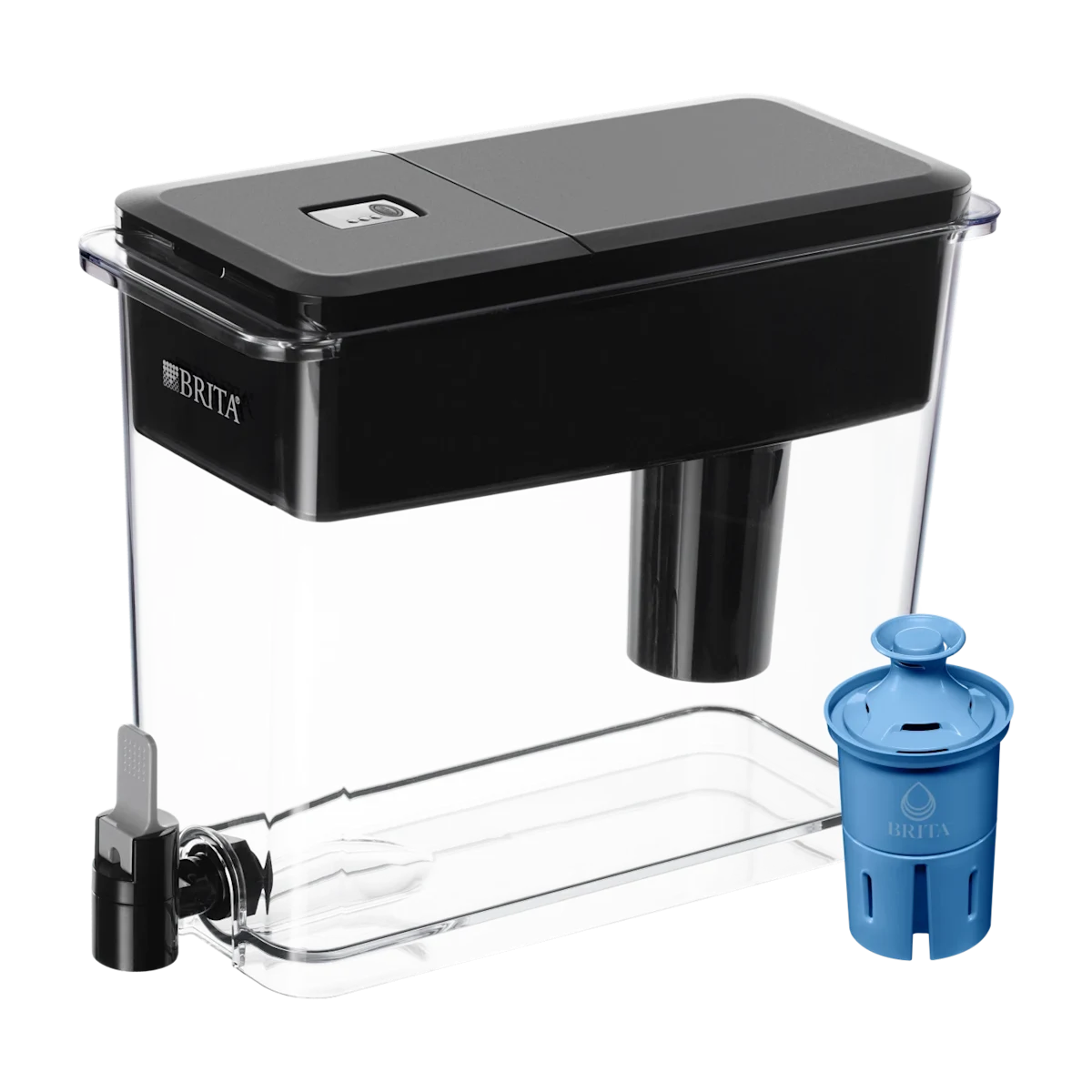
Brita Ultramax Water Dispenser with Elite Filter
A 27-cup gravity dispenser with refrigerator-friendly shape, front spigot and a six-month Elite filter.
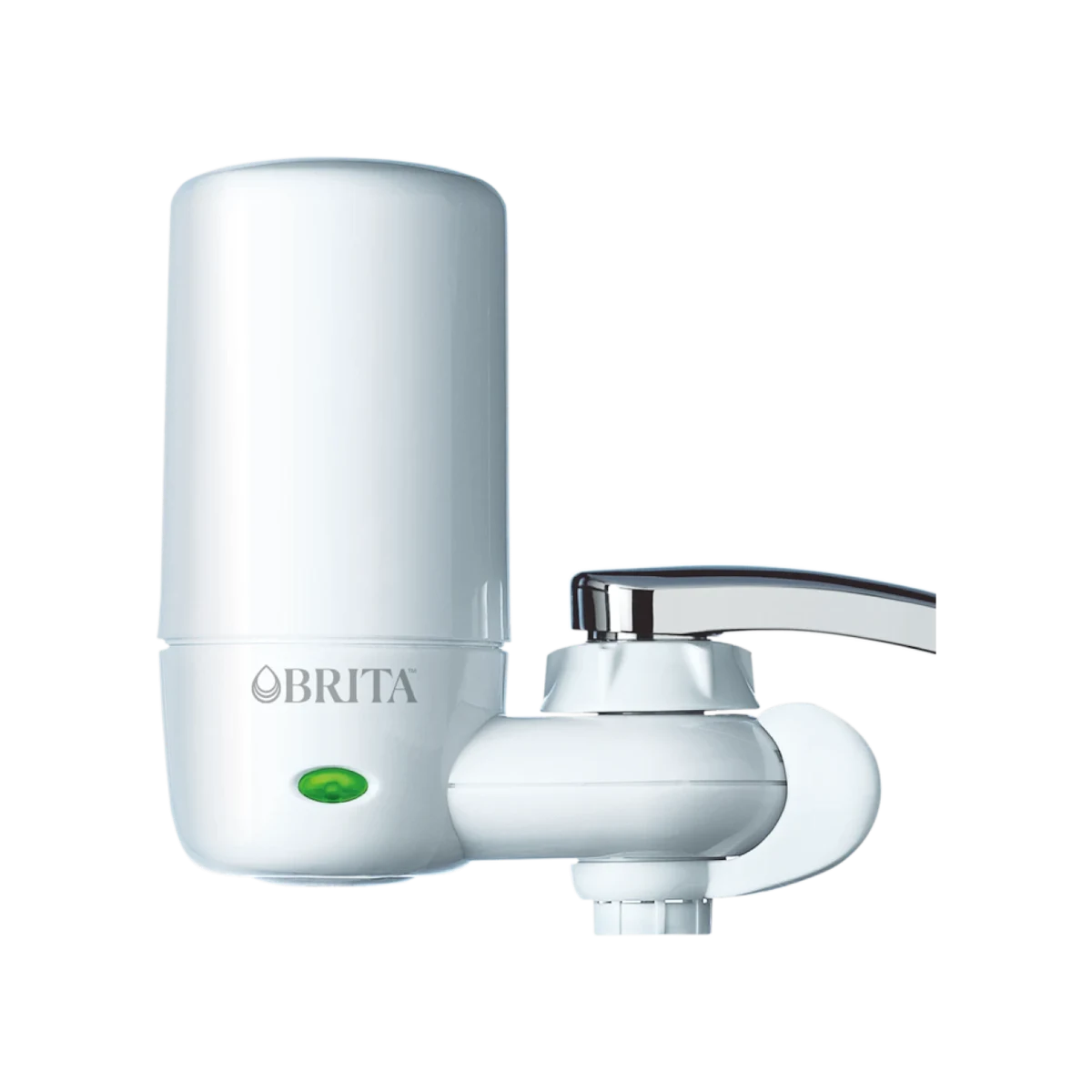
Brita Elite Advanced Water Filter Faucet System
A faucet-mounted system with three water modes, electronic filter indicator and a 100-gallon cartridge.
Brita is a household water-filtration brand offering pour-through pitchers, large dispensers, faucet-mounted systems, filtered bottles and powered countertop devices. The products vary significantly in contaminant-reduction claims, filter life, capacity and ongoing cost.
This review compares four products that represent the main Brita categories in 2026: Brita Hub Countertop Water Filter System, Tahoe Water Pitcher with Elite Filter, Ultramax Water Dispenser with Elite Filter and Elite Advanced Water Filter Faucet System. We examine current prices, certified claims, capacity, filter replacement, cleaning, compatibility, warranty coverage and the 30-day satisfaction guarantee.
Water-safety note: Brita products are point-of-use filters, not universal treatment systems. Use only with municipally treated potable water or well water that is regularly tested and confirmed microbiologically safe. A boil-water notice, bacteria, viruses or contaminants outside the model’s certified performance sheet may require different treatment.
Four standout Brita products
1. Brita Hub Countertop Water Filter System — $194.95
The full-size Brita Hub is the strongest filtration option in this comparison. It uses a powered pressurized carbon-block system and dispenses room-temperature water through preset or manual controls.
- Best Hub use: households wanting faster countertop filtration and broader certified reduction than a standard pour-through pitcher.
- Price checked: $194.95.
- Reservoir capacity: 12 cups.
- Certified positioning: reduces more than 70 contaminants, including chlorine, lead and microplastics, according to the current performance sheet.
- Lead claim: removes 99% of lead under the certified test conditions.
- Dispensing: 12-ounce and 20-ounce preset buttons plus manual filling.
- Water temperature: room temperature only; the device does not chill or heat the water.
- Filter life: 120 gallons, generally described as up to six months.
- Replacement cost: one Hub filter currently costs $29.99.
- Hub warranty: two-year limited warranty for defects in materials and workmanship.
- Main Hub trade-off: it requires electricity, takes more counter space than a pitcher and uses a proprietary filter that does not fit other Brita systems.
2. Tahoe Water Pitcher with Elite Filter — $41.99
The Tahoe is a ten-cup manual pitcher with an easy-fill lid and SmartLight indicator. The included Elite filter offers broader contaminant reduction and longer life than Brita Original filters.
- Best Tahoe use: small households seeking affordable lead reduction without electricity or faucet installation.
- Price checked: $41.99.
- Capacity: 10 cups.
- Starter cartridge: one blue Brita Elite filter is supplied.
- Elite contaminant claim: reduces 30 contaminants and removes 99% of lead under certified conditions.
- Filter interval: 120 gallons or approximately six months for many households.
- Replacement cost: one Elite filter currently costs $19.99.
- Indicator: SmartLight shows green, yellow or red according to estimated filter life.
- Cleaning: remove the filter and hand-wash pitcher components with mild soap; do not use the dishwasher.
- Pitcher warranty: the current limited-warranty document lists 90 days for pitchers and dispensers.
- Main Tahoe trade-off: filtration occurs by gravity, so refilling is slower than a powered dispenser and the ten-cup capacity may be small for large households.
3. Ultramax Water Dispenser with Elite Filter — $49.99
The Ultramax uses the same Elite filtration platform in a much larger 27-cup dispenser. Its slim rectangular form can sit on a counter or inside a sufficiently large refrigerator.
- Best Ultramax use: families, shared kitchens and offices that want more than one gallon of filtered water available.
- Price checked: $49.99.
- Capacity: 27 cups.
- Supplied cartridge: one Elite filter is included with the dispenser.
- Lead claim: removes 99% of lead under the certified performance conditions.
- Filter schedule: replace after 120 gallons or around six months for typical household use.
- Filter reminder: sticker-based indicator rather than Tahoe’s SmartLight system.
- Dimensions: approximately 9.67 inches high, 13.94 inches wide and 5.19 inches deep.
- Cleaning: hand-wash the lid and reservoir with mild soap and avoid abrasive cleaners.
- Dispenser warranty: the current limited-warranty document lists 90 days.
- Main Ultramax trade-off: a full reservoir is heavy, the spigot requires periodic cleaning and refrigerator fit depends on shelf depth and clearance.
4. Elite Advanced Water Filter Faucet System — $32.49
The Elite Advanced Faucet System attaches to many standard faucets and lets users switch among filtered water, regular stream and unfiltered spray. It provides on-demand filtration without repeatedly filling a pitcher.
- Best faucet-system use: renters and households wanting filtered water directly from a compatible kitchen faucet.
- Price checked: $32.49 with one filter.
- Filter capacity: 100 gallons.
- Typical interval: approximately four months for many households.
- Current reduction claims: removes 99% of lead and reduces chlorine taste and odor, benzene, asbestos and trichloroethylene under certified conditions.
- Replacement cost: one faucet replacement filter currently costs $17.99.
- Water modes: filtered stream, unfiltered stream and unfiltered spray.
- Filter indicator: electronic status light indicates when replacement is approaching.
- Installation: designed for many standard faucets and may require an included adapter; it does not fit every pull-out or specialty faucet.
- Faucet-system warranty: one-year limited warranty.
- Main faucet-system trade-off: the housing adds weight and bulk to the faucet, compatibility is limited and flow may decline in sediment-heavy water.
What makes Brita different?
Brita offers several filtration formats at relatively accessible prices. A customer can choose a small pitcher, refrigerator dispenser, faucet attachment, filtered bottle or powered countertop system without moving directly to under-sink plumbing.
The brand also publishes performance data sheets for specific combinations of device and filter. This is important because “Brita” does not refer to one universal level of filtration.
Hub versus Elite pitcher filtration
The Hub uses pressurized carbon-block filtration and is certified for more than 70 contaminant claims. It dispenses filtered water quickly and has preset fill amounts.
Tahoe and Ultramax use gravity to move water through an Elite filter, which currently lists 30 contaminant reductions. They cost much less and do not require electricity.
Choose Hub for broader certified reduction and dispensing convenience. Choose an Elite pitcher or dispenser for lower upfront cost and portability.
Tahoe versus Ultramax
Tahoe is easier to carry, pour and fit on a refrigerator shelf. Its SmartLight indicator is more informative than a date sticker.
Ultramax holds nearly three times as much water and uses a stationary spigot. It is more convenient for several people but less convenient to carry to a sink when full.
Elite versus Original filters
Brita Original filters currently last 40 gallons or about two months and cost from $7.99 for one filter. They mainly target chlorine taste and odor plus selected metals such as copper, mercury and cadmium.
Elite filters last 120 gallons or about six months and add broader certified reductions, including 99% of lead. They cost more per cartridge but require fewer replacements.
Hub filter versus Elite filter
Both are rated to 120 gallons and are commonly described as six-month filters. They are not physically interchangeable.
The Hub cartridge currently costs $29.99 and supports the powered 70-plus-contaminant platform. The Elite cartridge currently costs $19.99 and fits compatible Brita pitchers and dispensers.
Faucet filtration versus a pitcher
A faucet system delivers filtered water immediately and avoids waiting for a reservoir to drain. It can be convenient for cooking pots and repeated glass filling.
A pitcher works with nearly any tap and can be chilled in a refrigerator. It does not place additional weight on the faucet or require adapter compatibility.
Understanding certified contaminant claims
Claims apply to the exact model and filter combination described in the performance data sheet. The sheet lists test concentrations, reduction percentages and rated capacity.
“Reduces 70+ contaminants” does not mean the device removes every possible contaminant from any source water. Substances may also be absent from a particular household’s tap water.
Lead reduction
The featured Hub, Elite pitcher, Elite dispenser and faucet system all advertise 99% lead reduction under their applicable certified conditions.
A filter cannot repair lead plumbing or identify the source of contamination. Homes with known lead concerns should test water and follow local public-health guidance.
Microplastics and particulates
The Hub and Elite performance claims include selected microplastic or particulate reductions. The exact particle class and test method should be confirmed in the relevant data sheet.
These claims should not be generalized to viruses, bacteria or all particles at every size.
Brita is not reverse osmosis
The four featured products use carbon-based and related filtration technologies rather than a reverse-osmosis membrane. They do not produce a concentrated wastewater stream.
They also do not provide the same broad reduction of dissolved salts as RO. A consumer concerned about fluoride, nitrate or total dissolved solids should check the specific performance sheet rather than assuming reduction.
Using only cold potable water
Brita recommends cold tap water. Hot water can damage filter media or reduce performance.
The devices are intended for treated potable water or regularly tested safe well water. They should not be used to make microbiologically unsafe water safe to drink.
Preparing a new Elite filter
Insert the Elite filter firmly into the reservoir and add cold water. Brita instructs users to discard the first three pitchers or use that water for plants.
A tight seal is important because water bypassing the cartridge will not receive the represented filtration.
Preparing the faucet filter
The faucet system does not require soaking. Brita instructs users to flush the newly installed filter with cold water for five minutes before use.
The 100-gallon rated life begins after this activation flush.
Filter indicators are estimates
SmartLight and faucet indicators track use according to the product’s design. A sticker reminder tracks time rather than direct water quality.
Hard water, sediment, rust or reduced flow can require earlier replacement even when the indicator has not reached red.
Annual replacement cost
A typical Elite user replacing twice per year spends about $39.98 at the current single-filter price. A Hub user replacing twice per year spends about $59.98.
A faucet user replacing every four months spends about $53.97 annually at the current single-filter price. Actual cost can be lower with multi-packs or retailer promotions.
Cleaning pitchers and dispensers
Remove the filter and wash plastic components by hand with mild dish soap. Brita advises against dishwashers and abrasive detergents for the featured pitcher and dispenser.
Clean the Ultramax spigot and surrounding area regularly because moisture and residue can accumulate around moving parts.
Cleaning the Hub
Unplug the powered unit before cleaning the base and follow the user guide for reservoir care. Do not immerse electrical components.
If water flow slows despite available filter life, inspect the source-water quality and follow Brita’s troubleshooting guidance rather than forcing continued use.
Faucet compatibility
The faucet system works with many standard threaded faucets. Pull-down, spray-head and nonstandard designs may be incompatible.
Do not force an adapter or overtighten the system. Incorrect installation can damage faucet threads or cause leakage.
Counter and refrigerator space
The Hub is 14.4 inches high, 7.5 inches wide and 11.4 inches long. It also needs room for reservoir filling and ventilation.
Ultramax is shallow but wide. Measure the intended refrigerator shelf before purchase because door bins and shelf supports can interfere with the spigot.
Warranty differences
The Hub has a separate two-year warranty covering defects in materials and workmanship for the original purchaser or gift recipient.
The current limited-warranty document lists 90 days for pitchers and dispensers and one year for faucet-mounted systems. Coverage applies to products bought from Brita or an authorized seller in the United States or Canada.
Thirty-day satisfaction guarantee
Brita offers a 30-day money-back guarantee or replacement for qualifying products purchased from Brita or an authorized US or Canadian seller.
The published exclusion document specifically excludes licensed products, including the Brita Hub, Brita Water and Brita-branded under-sink units. Proof of purchase may be required.
Authorized-seller requirement
Warranty and guarantee coverage can be denied for products purchased from unauthorized marketplace sellers. The lowest listing price is not automatically the safest purchase.
Keep the receipt and verify seller authorization when warranty coverage matters.
What we like
- The Hub provides broader certified reduction than standard pour-through models.
- Tahoe offers lead reduction at a low initial price.
- Ultramax holds enough water for families and shared kitchens.
- The faucet system delivers filtered water without reservoir waiting.
- Elite and Hub filters are rated for 120 gallons.
- Brita publishes model-specific performance data sheets.
- Replacement filters are widely available.
What could be better
- Each product family uses different replacement filters.
- The Hub requires electricity and costs much more than a pitcher.
- Pitchers and dispensers currently have only a 90-day limited warranty.
- The 30-day guarantee excludes the Brita Hub.
- Gravity filtration requires waiting and repeated refilling.
- Faucet systems do not fit every faucet design.
- Brita filters are not universal treatment for unsafe source water.
Which Brita product should you choose?
- Choose Brita Hub for the broadest featured certified reduction and quick countertop dispensing.
- Choose Tahoe with Elite Filter for the best balance of price, portability and lead reduction.
- Choose Ultramax with Elite Filter for the highest gravity-fed capacity.
- Choose Elite Advanced Faucet System for on-demand filtration from a compatible standard faucet.
Who should consider Brita?
Brita is best suited to households using treated potable tap water that want improved taste or certified reduction of contaminants listed for a specific filter.
The brand is less suitable for users expecting reverse-osmosis treatment, microbiological purification, universal faucet compatibility or one filter cartridge that fits every product.
Final verdict
Brita remains one of the most accessible filtration ecosystems. Tahoe with Elite Filter is the strongest recommendation for most households because it combines certified lead reduction, six-month filter life and a moderate upfront price.
Ultramax is the practical family option, while the faucet system is best for compatible kitchens. Hub provides the broadest featured filtration claims and fastest dispensing, but its cost, electricity requirement and guarantee exclusion make it a more specialized purchase.
Overall, Brita is worth considering when the exact model’s performance sheet matches the contaminants of concern. Product choice should begin with water quality and certified claims, not pitcher color or capacity alone.
Editorial note: This review is based on official Brita US product, performance, warranty and satisfaction-guarantee information checked on August 3, 2026. Prices, claims, filter life and policies can change. The article does not claim firsthand testing or provide individualized medical advice.
Pros and cons
What stands out
- Broad range of formats
- Accessible entry prices
- Published performance sheets
- Long-life Elite filters
- Widely available replacements
Trade-offs
- Model-specific cartridges
- Short pitcher warranty
- Hub guarantee exclusion
- No microbiological purification
- Faucet compatibility limits
Rating details
Product details
Learn More
Consult a qualified healthcare professional before using supplements or making significant changes to diet, exercise or treatment.
What readers say
No reviews yet
Write a review
Share your experience with other readers.

Be the first reader to share an experience.