
We may not have personally tested every product. This review is based on official product information, product specifications and comparative research. It is not medical advice.

Featured products to compare
Prices and availability can change. Visit the official website for the latest information.
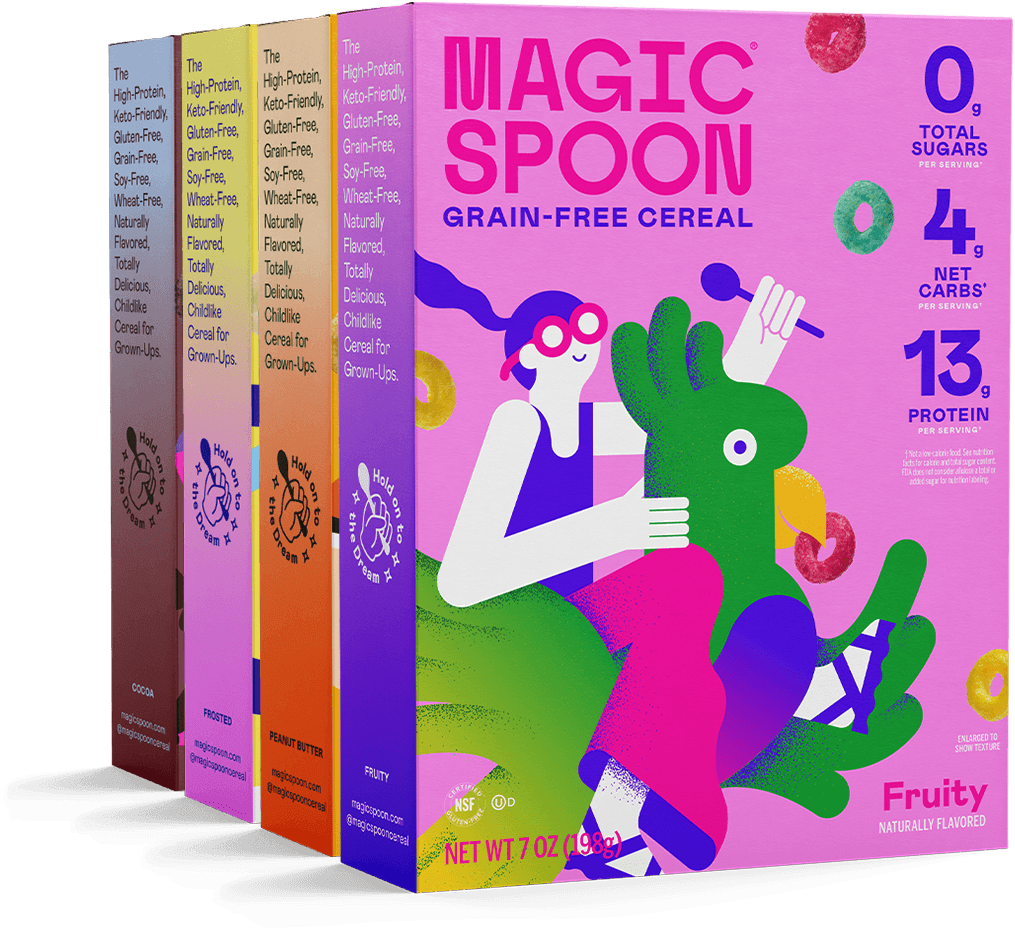
Magic Spoon Protein Cereal Variety 4, 4 Boxes
Four classic cereal flavors with 12–14 g complete milk protein, 0 g Total Sugars and 4–5 g net carbs per serving.
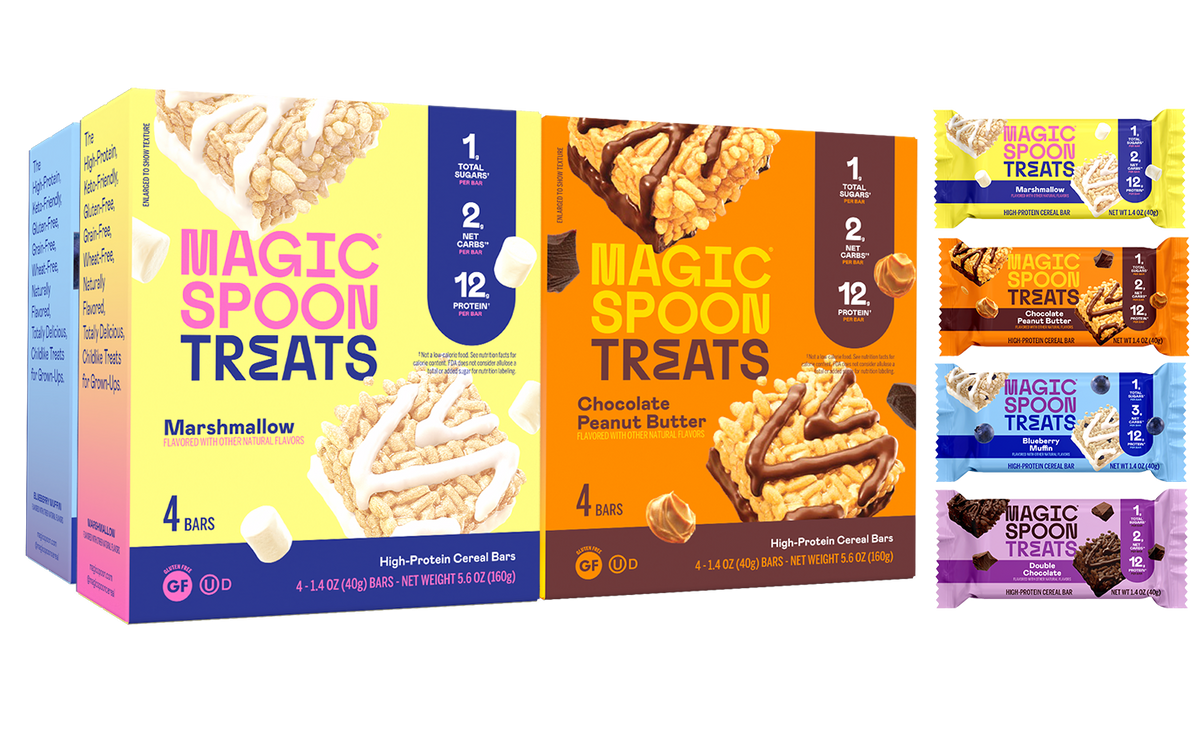
Magic Spoon Treats Sampler Pack, 16 Treats
Four cereal-treat flavors with 11–12 g complete protein, around 7 g fiber and 0–2 g sugar per treat.
Magic Spoon Protein Pastries Variety 4, 16 Pastries
Frosted Strawberry, Cinnamon Brown Sugar and S’mores pastries with 11 g protein, 6 g fiber and 3 g sugar each.
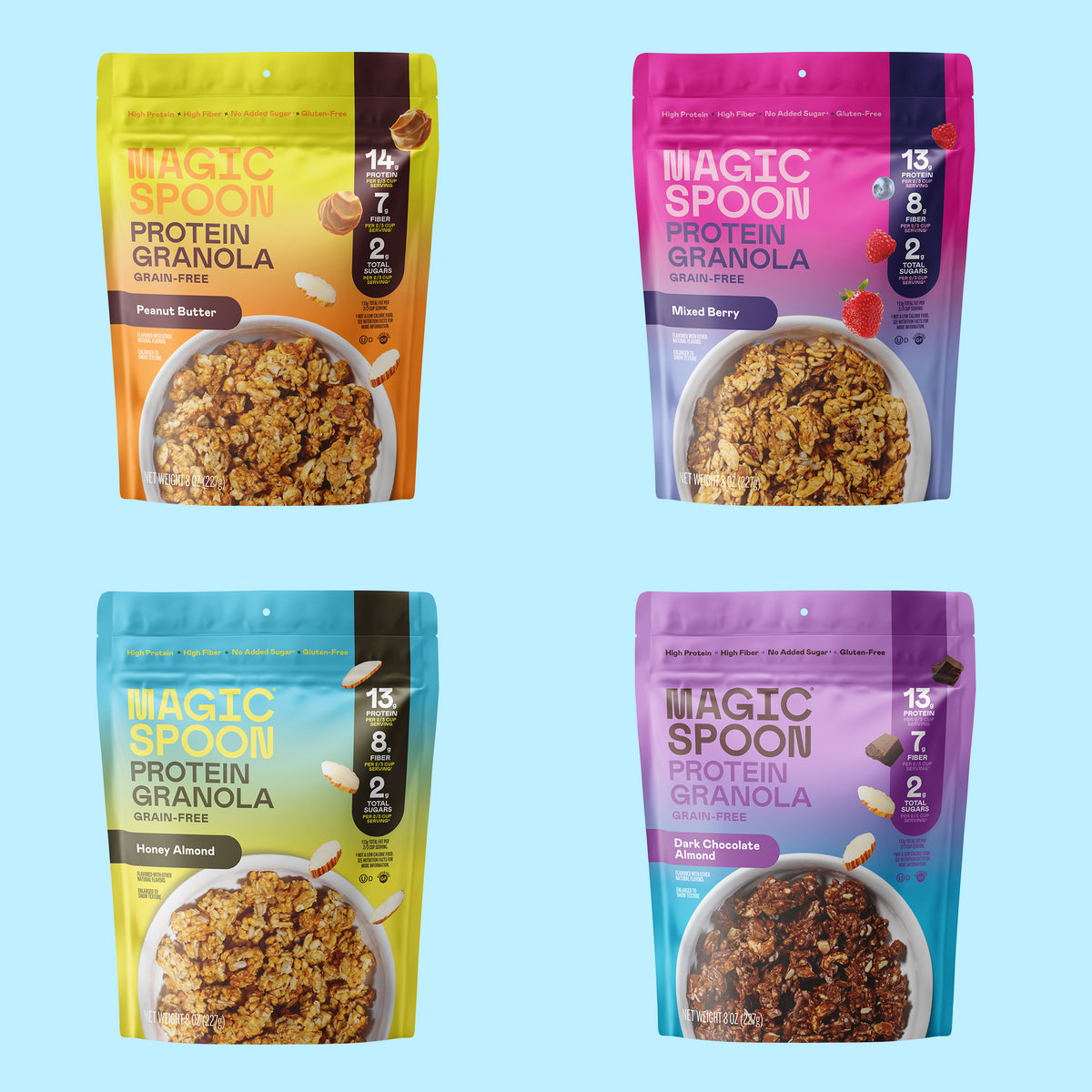
Magic Spoon Protein Granola Variety 4, 4 Bags
Four grain-free nut-and-seed granolas with 13–14 g complete protein, 7–8 g fiber and 0 g added sugar per serving.
What is Magic Spoon?
Magic Spoon is a high-protein breakfast and snack brand founded by Greg Sewitz and Gabi Lewis. The co-founders created the company after searching for cereal with the flavor and nostalgia of childhood products but a substantially different protein, sugar and carbohydrate profile.
The current catalog has expanded beyond cereal and now includes Protein Treats, Protein Granola, Protein Pastries, oatmeal, marshmallow cereal, Protein + Fiber cereal and customizable bundles.
Most of the original products rely on whey protein concentrate and casein for complete protein, allulose and monk fruit for sweetness, and oils, tapioca or added fiber for texture. That makes Magic Spoon nutritionally different from traditional grain-based cereal, but it also means that most products contain milk and are not vegan.
Our quick verdict
Magic Spoon earns a 4.8/5 editorial rating. It successfully creates sweet, crunchy breakfast and snack products with substantially more protein and less labeled sugar than most nostalgic competitors.
Protein Cereal Variety 4 is the best overall first purchase. Treats Sampler Pack is the best portable snack, Protein Pastries Variety 4 offers the most indulgent soft-baked format, and Protein Granola Variety 4 provides the highest fiber and the strongest nut-and-seed texture.
The main drawbacks are the premium price, milk-protein dependence, nut allergens in several products, strong sweetness from allulose and monk fruit, and possible bloating from chicory-root inulin or concentrated fiber.
Magic Spoon product lines explained
Product lineCurrent headline nutritionBest use Protein Cereal12–14 g protein, 0 g sugar, 4–5 g net carbsBreakfast or crunchy snack Protein Treats11–12 g protein, 0–2 g sugar, 2–3 g net carbsPortable cereal-bar-style snack Protein Pastries11 g protein, 6 g fiber, 3 g sugarSoft-baked breakfast or dessert-style snack Protein Granola13–14 g protein, 7–8 g fiber, 0 g added sugarYogurt topping or crunchy breakfastThese values are ranges across flavors. Customers should read the exact Nutrition Facts panel because serving size, calories, sodium, fat, allergens and total carbohydrate differ.
Best overall: Protein Cereal Variety 4
Protein Cereal Variety 4 contains four full-size boxes:
- Fruity
- Frosted
- Cocoa
- Peanut Butter
The current one-time price is $39, which Magic Spoon lists at approximately $1.95 per serving. Subscribe & Save costs $31.20, or about $1.56 per serving.
Across the four flavors, the current headline nutrition is:
- 12–14 g complete protein
- 0 g Total Sugars
- 4–5 g net carbohydrates
- Serving sizes of approximately 36–38 g
- No gluten ingredients
- No wheat, rice or soy in the original cereal formula
Where the cereal protein comes from
The original Protein Cereal uses a milk-protein blend containing whey-protein concentrate and casein. These proteins provide all nine essential amino acids.
Thirteen or fourteen grams is meaningful for cereal but does not make a bowl a nutritionally complete meal. Milk, yogurt, fruit or another food may be needed for additional energy, fiber and food variety.
Protein requirements differ by body size, age and activity. A higher protein number is not automatically beneficial when total daily intake is already sufficient.
What does “0 g sugar” really mean?
Magic Spoon tastes sweet because it uses allulose and monk fruit. Allulose is a rare sugar, but FDA guidance allows manufacturers to exclude it from Total Sugars and Added Sugars and to count it at approximately 0.4 calories per gram.
Therefore, “0 g sugar” does not mean the cereal contains no sweet-tasting carbohydrate ingredients. It means the labeled sugars round to zero under current U.S. rules.
Magic Spoon does not publicly state the exact allulose amount in every serving. Customers should not interpret the front label as meaning zero carbohydrate or zero metabolic effect for every individual.
Understanding “net carbs”
Magic Spoon calculates net carbs by subtracting fiber and allulose from total carbohydrate. This is a common low-carbohydrate marketing calculation, but Net Carbs is not a mandatory standardized line on the FDA Nutrition Facts panel.
People following a ketogenic diet often track this calculation, while people using insulin or carbohydrate-counting plans may need to follow instructions from their clinician instead.
The current original cereal has 4–5 g net carbs per serving. Protein + Fiber cereal and marshmallow products have different totals and should not be assumed identical.
Taste and texture
The cereal is light, crisp and more protein-forward than corn or rice cereal. Fruity and Frosted are the sweetest-tasting flavors; Cocoa is more restrained, while Peanut Butter has the richest flavor and contains peanuts.
Casein and whey can create a slightly dry finish. Leaving the cereal in milk for several minutes softens it quickly.
Best portable snack: Treats Sampler Pack
Treats Sampler Pack contains 16 individually wrapped cereal treats in four boxes:
- Marshmallow
- Chocolatey Peanut Butter
- Blueberry Muffin
- Double Chocolate
The current one-time reference price is $39. The standard 20% subscription price is $31.20.
Each full-size treat currently provides approximately:
- 11–12 g complete protein
- About 7 g fiber
- 0–2 g sugar depending on flavor
- 2–3 g net carbs
- A 40 g serving
Treats versus the cereal
The Treats use similar protein and sweetener concepts but add binders and fats needed to form a portable bar. They are easier to carry than a cereal bowl and have a chewy-crispy texture.
They are still packaged snacks rather than complete meals. Protein does not automatically offset calorie density or make unlimited portions appropriate.
Nut and milk allergens
All current Protein Treat flavors contain almonds or peanuts, and the line contains dairy protein. They are not suitable for people with milk, peanut or relevant tree-nut allergies.
Milk allergy differs from lactose intolerance. Whey and casein can trigger an immune reaction even when lactose content is low.
FDA advises consumers with food allergy to read the entire ingredient list and Contains statement every time because formulas and shared-facility warnings can change.
Best soft-baked option: Protein Pastries Variety 4
Protein Pastries Variety 4 contains 16 pastries:
- 8 Frosted Strawberry
- 4 Cinnamon Brown Sugar
- 4 S’mores
The current price is $39 one time or $31.20 by subscription.
Each pastry currently provides:
- 11 g protein
- 6 g fiber
- 3 g total sugar
- Up to approximately 5 g net carbs
- A 56 g serving
- No artificial flavors
Are Protein Pastries a complete breakfast?
One pastry is a fortified protein snack rather than a complete breakfast. It may be paired with fruit, milk, yogurt or another food when additional calories and micronutrients are required.
The pastry has substantially less sugar and more protein than many conventional toaster pastries, but that comparison does not make it equivalent to a balanced meal.
Heating safety
Magic Spoon says the pastries can be eaten directly, microwaved briefly, heated in a toaster oven or frozen.
Do not use a vertical pop-up toaster. Frosting or filling may melt downward and create a burn or fire risk.
Pastry allergen considerations
The pastries contain dairy. Magic Spoon says they do not contain nuts as direct ingredients but are manufactured in a facility that processes peanuts, sesame and tree nuts.
People with serious allergies should use the current package statement rather than relying only on a website summary.
Best high-fiber option: Protein Granola Variety 4
Protein Granola Variety 4 contains four bags:
- Peanut Butter
- Honey Almond
- Mixed Berry
- Dark Chocolate Almond
The one-time price is $39, or approximately $2.78 per serving. The subscription price is $31.20, or about $2.22 per serving.
Across the variety, current headline nutrition includes:
- 13–14 g complete protein
- 7–8 g dietary fiber
- 0 g added sugar
- Approximately 2 g total sugar in the brand’s comparison data
- Approximately 130 calories in the comparison serving
Granola without grains
Traditional granola is usually based on oats. Magic Spoon Protein Granola is grain-free and uses combinations of nuts, seeds, milk protein, coconut oil, fiber and flavor ingredients.
The result is crunchy and protein-rich but nutritionally closer to a formulated nut-and-protein cluster than ordinary oat granola.
Fiber and bloating
Seven or eight grams of fiber is substantial for one small serving. Magic Spoon products may include chicory-root inulin and other concentrated fibers.
NIDDK notes that some people experience more gas or bloating when they consume too much fiber or carbohydrates that are incompletely digested before reaching the colon.
Begin with one measured serving rather than eating directly from the bag. Drinking enough fluid and increasing fiber gradually may improve tolerance.
Nut allergens in granola
All current Protein Granola flavors contain almonds, cashews and/or peanuts. The product also contains dairy.
It is unsuitable for nut-free households, schools or workplaces unless the exact environment permits the listed allergens.
Product comparison
ProductProteinFiberSugar claimBest for Protein Cereal Variety 412–14 gVaries by flavor0 g Total SugarsBest overall breakfast product Treats Sampler Pack11–12 gAbout 7 g0–2 g sugarPortable snack Protein Pastries Variety 411 g6 g3 g sugarSoft-baked snack Protein Granola Variety 413–14 g7–8 g0 g added sugarHigh-fiber crunchIs Magic Spoon healthy?
Magic Spoon offers substantially more protein and less labeled sugar than most nostalgic cereals and toaster pastries. That can make it useful for a customer who wants a sweet breakfast while limiting conventional added sugar.
It remains a processed packaged food built from isolated proteins, specialty sweeteners, oils, starches and fibers. “High protein” and “keto-friendly” do not automatically make it more nutritious than eggs, yogurt, fruit, oats, nuts or other minimally processed breakfast foods.
The most accurate answer depends on the exact product, serving size and the rest of the diet.
Does Magic Spoon support weight loss?
Protein and fiber may support fullness, and a measured bowl can help with portion planning. Weight loss still requires an appropriate overall calorie deficit.
Adding cereal, granola or treats to an unchanged diet can increase total calories. Granola is especially easy to overeat because the serving appears small.
“Keto-friendly” does not mean calorie-free and does not guarantee weight loss.
Can it support muscle gain?
Whey and casein provide complete protein. A serving can contribute to daily protein intake, especially when combined with milk or yogurt.
Muscle gain requires resistance training, adequate total energy, sufficient protein across the day and recovery. Breakfast cereal does not replace these fundamentals.
Allulose and digestive tolerance
Allulose has a lower caloric value and smaller average glycemic response than ordinary sugar, but tolerance differs. A 2026 randomized study using much larger daily allulose doses reported mild, temporary gastrointestinal symptoms in some healthy adults.
The exact allulose dose per Magic Spoon serving is not publicly itemized, so the study cannot be used to predict an individual response to one bowl.
People sensitive to allulose or concentrated fiber may experience gas, bloating, loose stool or stomach discomfort when eating several servings.
Diabetes and blood-glucose considerations
Zero labeled sugar does not mean zero total carbohydrate. Magic Spoon contains allulose, fiber, tapioca or other carbohydrate ingredients depending on the product.
Allulose may produce a smaller glucose response than sucrose, but people using insulin or glucose-lowering medication should follow their individual carbohydrate-counting plan and monitor response.
Magic Spoon is food, not treatment for diabetes.
Gluten-free does not mean dairy-free
The current FAQ distinguishes product lines:
- Original Protein Cereal is certified gluten-free but contains dairy.
- Protein Granola is certified gluten-free and contains dairy and nuts.
- Protein Treats contain dairy and nuts; gluten-free certification is still described as pending.
- Protein Pastries are gluten-free and contain dairy.
- Protein + Fiber Cereal is currently the dairy-free option.
- Cereal with Marshmallows currently contains gluten, dairy and gelatin.
Customers with celiac disease or allergy should select the exact product rather than assuming every Magic Spoon item shares the same status.
FDA requires foods labeled gluten-free in the United States to contain less than 20 ppm gluten.
Subscription program
The current Subscribe & Save program provides:
- 20% off eligible recurring orders
- A free bowl set with the first subscription order
- Flavor changes through the account
- VIP access to product launches
- Delivery intervals of 14, 30, 45 or 60 days on current product pages
- Skip or cancel controls
Subscription orders cannot generally combine the recurring discount with another price promotion.
Shipping
Magic Spoon currently processes most orders within one business day. Standard U.S. delivery normally takes approximately 5–7 days.
The company uses DHL and UPS, sometimes with USPS completing delivery. Expedited shipping is not currently offered.
Direct shipping is currently available to the United States—including Alaska, Hawaii and Puerto Rico—Canada and the United Kingdom. Canada is estimated at 5–10 business days and the United Kingdom at 10–14 business days, subject to customs and transit delays.
Free-shipping offers vary by subscription, bundle and temporary promotion, so confirm shipping charges at checkout.
Happiness Guarantee and refund policy
Magic Spoon advertises a 100% Happiness Guarantee. The published refund policy says that customers who do not love the cereal can receive a full refund for the first case, up to four boxes, when the request is eligible within six months of the order date.
Some campaign pages display a 30-day guarantee for newer products such as pastries, creating different wording across the website. Customers buying treats, granola or pastries should confirm the applicable guarantee with support before relying on a cash refund.
Defective or damaged items can be replaced. Damage should be reported promptly with the affected flavors and order details.
Packaging
Magic Spoon says most cardboard boxes are made from 100% recycled cardboard and can be recycled again.
Granola pouches are not currently recyclable under the company’s FAQ. Local recycling rules determine whether individual materials are accepted.
What we like
- High protein for cereal and snack formats.
- Very low labeled sugar.
- Complete whey and casein protein.
- Several certified gluten-free options.
- Broad flavor and format selection.
- Flexible 20% subscription discount.
What could be better
- Premium $39 minimum cases.
- Most products contain dairy.
- Treats and granola contain major nut allergens.
- Allulose and inulin may cause digestive symptoms.
- Net-carb marketing can be misunderstood.
- Guarantee wording differs between policy and campaign pages.
Who should consider Magic Spoon?
- Adults seeking high-protein cereal with little conventional sugar.
- Low-carbohydrate shoppers who tolerate dairy.
- People who want nostalgic flavors in measured portions.
- Gluten-free customers choosing an appropriate certified product.
- Busy users needing portable high-protein snacks.
Who may want to look elsewhere?
- People with milk-protein allergy.
- Vegans choosing the original product lines.
- Customers with peanut or tree-nut allergies.
- People sensitive to allulose, monk fruit or chicory-root fiber.
- Budget shoppers seeking ordinary cereal prices.
- Anyone expecting cereal or pastries to be a complete meal.
Final verdict: Is Magic Spoon worth buying?
Magic Spoon is worth considering for customers who miss sweet cereal and snacks but want more protein and substantially less labeled sugar.
Protein Cereal Variety 4 is the best first purchase. Choose Treats Sampler Pack for portability, Protein Pastries Variety 4 for a soft-baked format and Protein Granola Variety 4 for the highest fiber and a nut-and-seed crunch.
Start with one serving, check milk and nut allergens carefully, and treat “0 g sugar” and “keto-friendly” as label information rather than a guarantee of universal blood-glucose control or weight loss.
Pros and cons
What stands out
- High complete protein
- Low labeled sugar
- Multiple formats
- Certified gluten-free options
- Nostalgic flavors
- Flexible subscriptions
Trade-offs
- Premium pricing
- Milk protein
- Nut allergens
- Allulose tolerance concerns
- Fiber-related bloating
- Inconsistent guarantee wording
Rating details
Product details
Learn More
- Magic Spoon official website
- Magic Spoon founder story
- Protein Cereal Variety 4 official page
- Treats Sampler Pack official page
- Protein Pastries Variety 4 official page
- Protein Granola Variety 4 official page
- Magic Spoon FAQ
- Magic Spoon refund policy
- FDA allulose labeling guidance
- FDA food allergy guidance
- FDA gluten-free labeling guidance
- NIDDK dietary fiber and gas guidance
- 2026 randomized allulose tolerance study
Consult a qualified healthcare professional before using supplements or making significant changes to diet, exercise or treatment.
What readers say
No reviews yet
Write a review
Share your experience with other readers.
Be the first reader to share an experience.