
We may not have personally tested every product. This review is based on official product information, product specifications and comparative research. It is not medical advice.
Featured products to compare
Prices and availability can change. Visit the official website for the latest information.
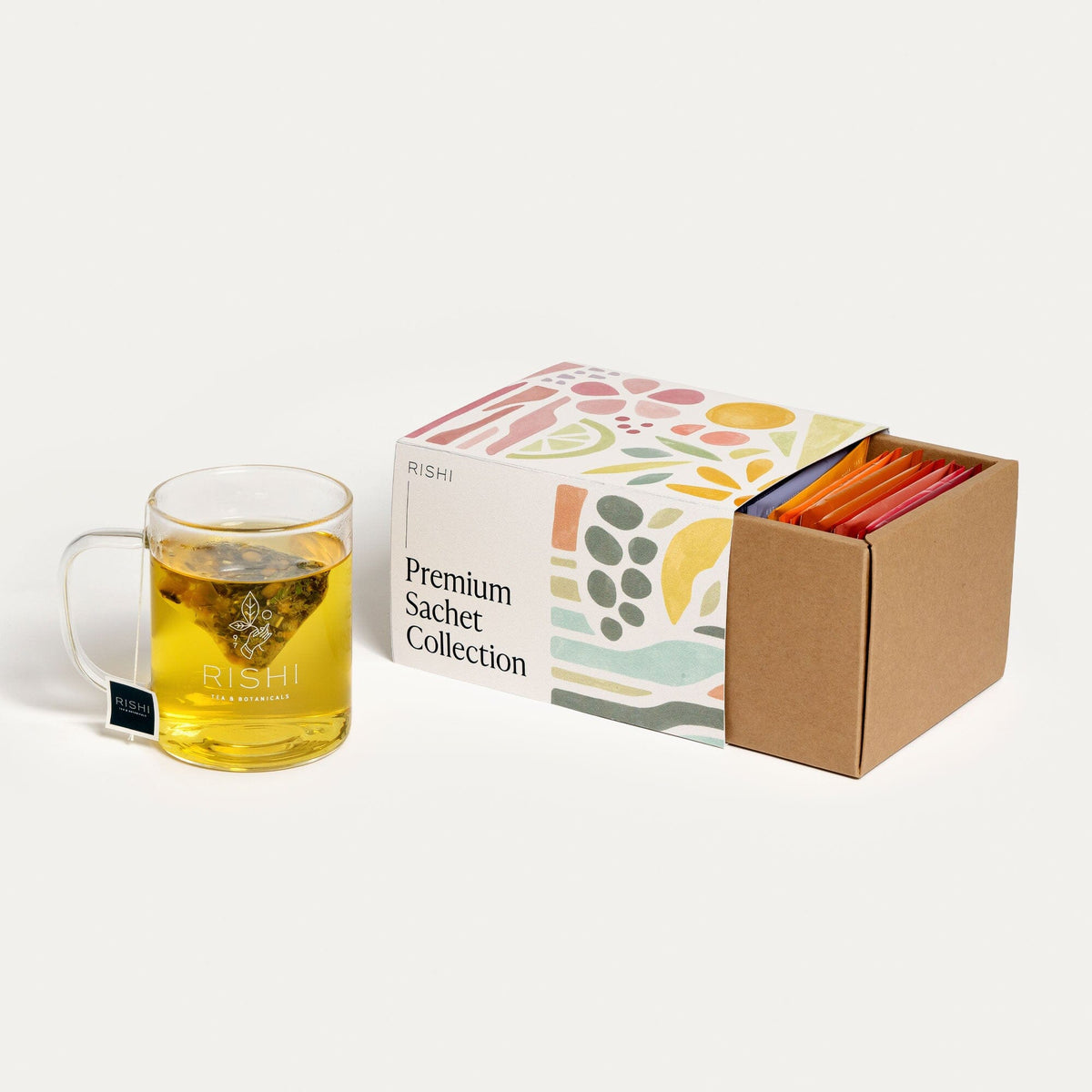
Premium Sachet Collection
A gift-ready assortment of 24 individually wrapped sachets representing 19 black, green, chai, matcha and caffeine-free botanical varieties.
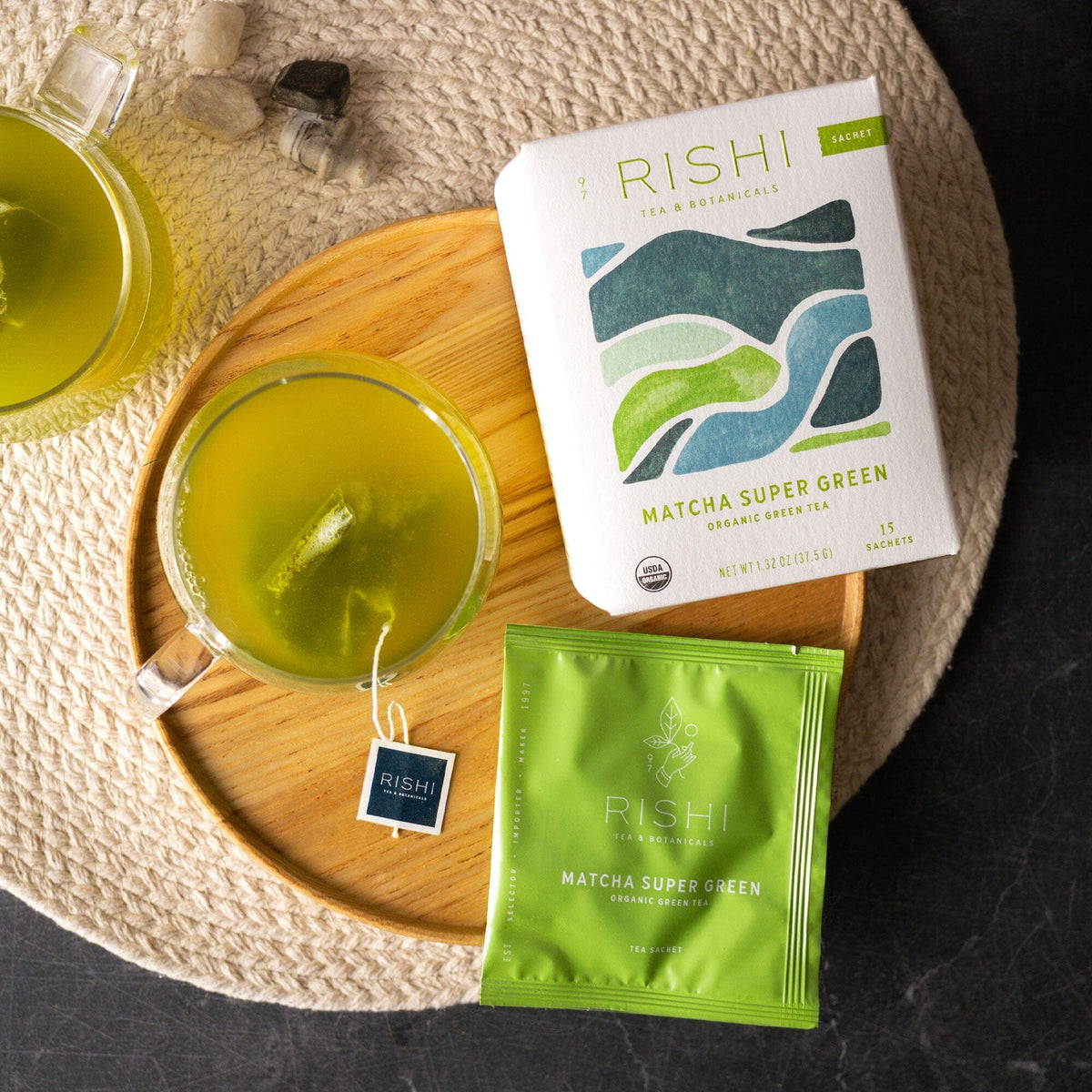
Matcha Super Green Sachets, 15 Count
Organic Japanese sencha blended with matcha powder for a vivid, smooth and umami-rich cup that brews like a standard tea bag.
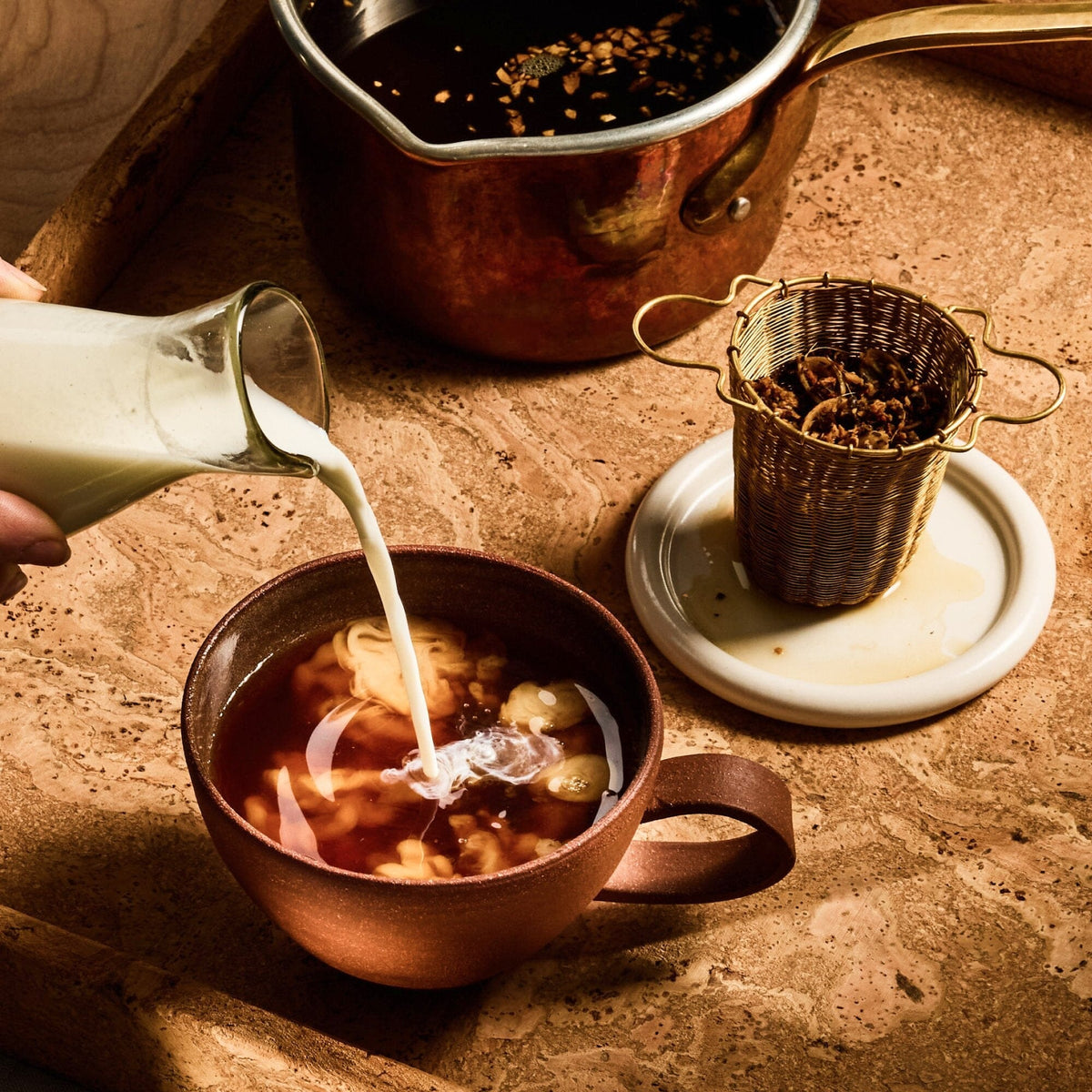
Masala Chai Loose Leaf, 1/4 Pound
A high-caffeine organic black-tea blend with cinnamon, cardamom, ginger, black pepper and clove, designed for stovetop preparation.
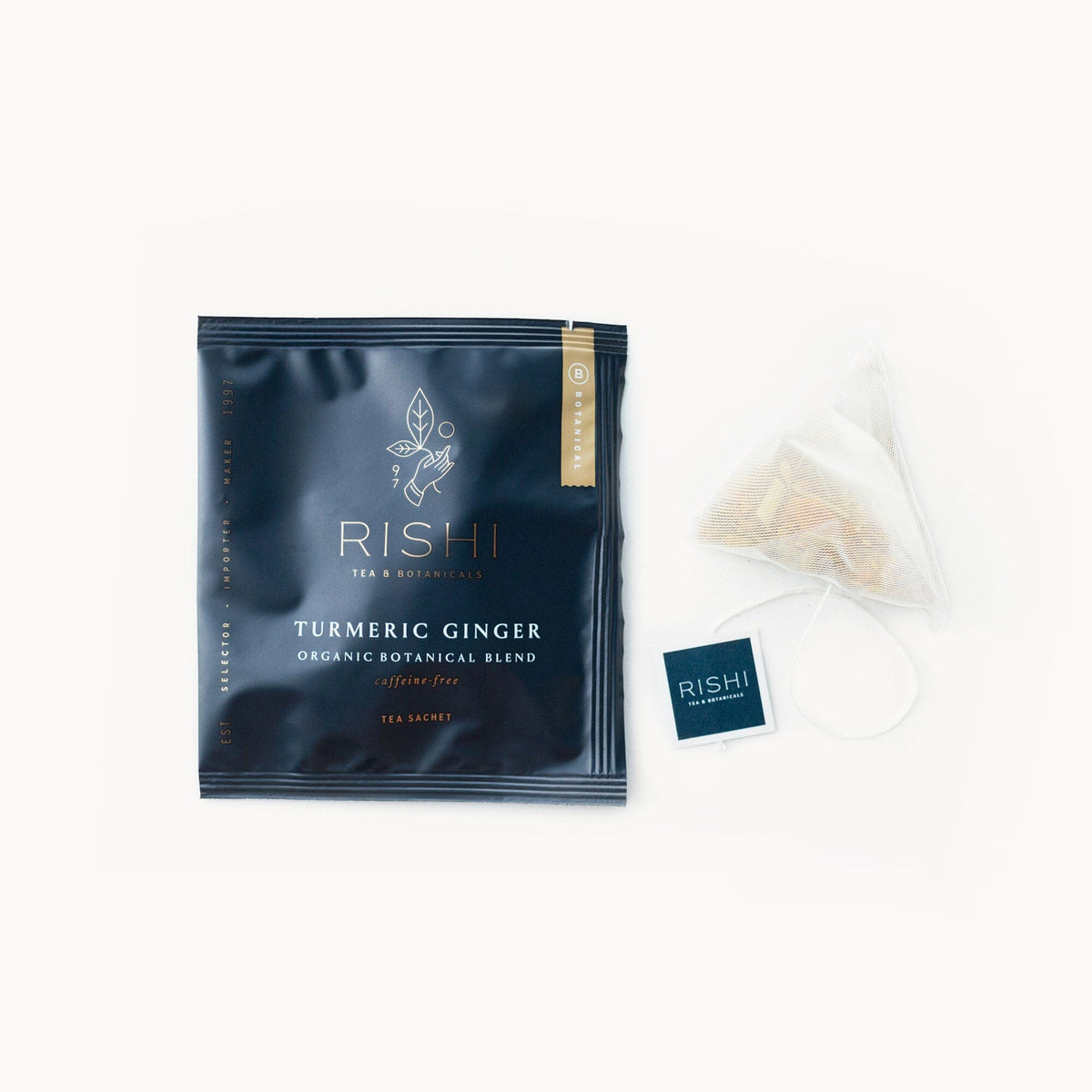
Turmeric Ginger Sachets, 15 Count
A caffeine-free botanical sachet with organic ginger, turmeric, licorice, lemongrass, orange peel and lemon peel.
What is Rishi Tea & Botanicals?
Rishi Tea & Botanicals is a Milwaukee-based specialty tea company founded in 1997. Its catalog spans loose-leaf tea, individually wrapped sachets, Japanese matcha, chai, caffeine-free botanicals, tea concentrates, sparkling drinks and teaware.
The brand positions itself as a selector, importer and maker rather than simply a reseller. Rishi says its buyers work directly with tea gardens and specialist producers, using origin visits and long-term grower relationships as part of its quality-control and sourcing process.
Our quick verdict
Rishi Tea earns a 4.8/5 editorial rating. It stands out for traceable origins, organic options, precise brewing guidance and a catalog that serves beginners and experienced loose-leaf drinkers equally well.
The main limitations are price and fulfillment. Premium single-origin teas and matcha can become expensive, free U.S. shipping generally requires an eligible order over $60, and the company’s guarantee is handled case by case rather than as a simple unrestricted return policy.
What makes Rishi Tea different?
- Direct-trade sourcing: Rishi describes direct relationships with growers as part of its product selection and quality-control process.
- Organic focus: the company has offered USDA-certified organic products since the early 2000s, although shoppers should still check certification on each individual listing.
- Detailed origin information: many product pages identify the country, region and sometimes individual ingredient origins.
- Multiple formats: loose leaf, sachets, concentrates, matcha powders and ready-to-drink botanicals serve different routines.
- Useful brewing instructions: recommended water temperatures and steeping times help customers avoid bitterness and weak extraction.
Product range at a glance
- Loose-leaf tea: black, green, white, oolong, pu’er, chai and botanical blends.
- Sachets: individually wrapped and unwrapped tea bags for convenient brewing.
- Matcha and powders: everyday, barista and higher-grade Japanese matcha options.
- Garden Direct: seasonal, origin-focused teas sourced from selected producers.
- Tea concentrates: chai and botanical bases designed to mix with milk or water.
- Teaware: glass brewers, mugs, filters and matcha accessories.
Best overall introduction: Premium Sachet Collection
The Premium Sachet Collection is the best entry point for customers who want to understand the brand before buying full-size tea. The sampler contains 24 individually wrapped sachets representing 19 teas and botanical blends, with doubles of several popular flavors.
The current assortment includes black tea, green tea, chai, matcha, floral botanicals and caffeine-free options. Examples include Earl Grey, Masala Chai, Matcha Super Green, Turmeric Ginger, Chamomile Medley, Blueberry Hibiscus and Valerian Dream.
At the review date, the Sachets Only version was listed at $41, while a version with a mug was listed at $51. This is not the cheapest way to buy tea per cup, but it is the lowest-risk way to discover preferred flavors before ordering a large loose-leaf pouch or bulk sachet box.
The sampler also works well as a gift because the teas are individually wrapped and organized in a presentation box. Buyers primarily interested in one flavor will receive better value from a single-variety package.
Best convenient green tea: Matcha Super Green Sachets
Matcha Super Green is a blend of organic sencha green tea and organic matcha sourced from Kagoshima on Japan’s Kyushu Island. It is not the same as whisking pure ceremonial matcha: the sachet contains sencha leaf coated or blended with matcha powder.
This format is more approachable for everyday green-tea drinkers. It provides the vivid color and fuller umami character associated with matcha while brewing like a normal tea bag. Rishi recommends steeping one sachet in 8 ounces of water at approximately 160°F for two minutes.
The current 15-count package was listed at $10, while 30 unwrapped sachets were listed at $20. A 50-count bulk case was listed at $36. The individually wrapped 15-count option is better for travel; the unwrapped package creates less individual packaging and offers similar per-serving value.
The blend contains a medium level of caffeine. Customers seeking traditional matcha texture, foam and full-leaf consumption should choose a pure matcha powder instead.
Best traditional chai experience: Masala Chai Loose Leaf
The Masala Chai loose-leaf blend uses organic black tea, cinnamon, cardamom, ginger root, black pepper and clove. Rishi describes the tea base as a combination of malty Assam and Orange Pekoe from northern Thailand, supported by spices sourced from several regions.
This is the most traditional and customizable product in our comparison. The recommended method uses two tablespoons of chai, one cup of water and one cup of milk. The mixture is brought to a boil, simmered for five minutes, strained and sweetened to taste.
A 1/4-pound pouch with approximately nine or more servings was listed at $17.50. A one-pound pouch was $50, while a small Teaser size was $2.50. The Teaser is the sensible first purchase because spice intensity is subjective.
The blend is high in caffeine compared with Rishi’s herbal products. It also requires more time and equipment than a sachet or bottled concentrate, but the drinker gains control over milk, sweetness, strength and spice extraction.
Best caffeine-free choice: Turmeric Ginger Sachets
The Turmeric Ginger sachets combine organic ginger root, turmeric root, licorice root, lemongrass, orange peel, lemon peel and citrus essential oils. The result is warm and spicy, with licorice adding noticeable natural sweetness.
Rishi recommends a five-to-seven-minute steep. Because the blend contains no tea leaf, it is naturally caffeine-free and suitable later in the day for most customers.
The 15-count package was listed at $10, 30 unwrapped sachets at $20 and the 50-count bulk case at $36. The 15-count box is the best starting size because licorice root can dominate the flavor for some drinkers.
This product should be evaluated as a botanical beverage rather than a treatment. The product page does not present the ingredients as standardized therapeutic doses, and customers should not assume that drinking the tea reproduces results from studies of concentrated turmeric, curcumin or ginger supplements.
Loose leaf versus sachets
FormatMain advantagesMain trade-offs Loose leafGreater control over dose, strength and repeat infusionsRequires a filter, strainer or teapot Wrapped sachetsEasy for travel, offices and giftingMore packaging per cup Unwrapped sachetsConvenient with less individual wrappingNeed an airtight container after opening Matcha powderFull powdered leaf and traditional whisked textureMore preparation skill and usually higher cost ConcentrateFast café-style chai and iced drinksHeavier to ship and less control over sugarTea quality and freshness
Rishi’s strongest advantage is the amount of product-level information it provides. Origin, ingredient list, caffeine category and brewing instructions are visible on many listings. This makes it easier to distinguish a pure tea from a flavored blend and to choose an appropriate preparation method.
Tea remains an agricultural product, so flavor can vary slightly by harvest and season. Rishi acknowledges that variation and offers low-cost Teaser portions of many loose-leaf teas. Sampling before purchasing a pound is particularly important for spicy chai, smoky tea, bitter green tea and strong botanical blends.
After opening, tea should be kept airtight, dry and away from heat, light and strong kitchen odors. Matcha powder generally loses freshness more quickly than intact tea leaves.
Caffeine levels and brewing accuracy
Rishi labels products as high, medium, low or caffeine-free rather than promising an exact milligram amount for every cup. Actual caffeine extraction changes with the quantity used, leaf type, water temperature, steeping time and number of infusions.
- Masala Chai: classified as high caffeine.
- Matcha Super Green: classified as medium caffeine.
- Turmeric Ginger: caffeine-free.
- Sampler: contains a mixture of caffeinated and caffeine-free varieties.
Water temperature is especially important for green tea. Boiling water can make Matcha Super Green harsh, while chai and botanicals generally benefit from hotter water and longer extraction.
Organic and sustainability considerations
Rishi says sustainability is connected to its organic sourcing and direct grower relationships. The company was among the earlier tea businesses to obtain USDA organic certification under the National Organic Program, and many current listings are certified organic.
Not every item should be assumed to have identical certification, packaging or environmental impact. Customers should confirm the organic seal on the specific product page and package.
Loose-leaf tea can reduce individual wrappers, but online delivery, protective packaging and international sourcing still carry an environmental footprint. Larger packages are most sensible when the tea will be consumed before quality declines.
Shipping, guarantees and international availability
Rishi’s current consumer policy lists an $8 flat standard economy shipping fee for most orders within the contiguous United States. Tea concentrates and Sparkling Botanicals carry a $12 standard shipping fee. The storefront currently promotes free standard shipping on eligible orders over $60.
Orders normally require one to three business days of processing, with longer times during high-volume promotions. International delivery is limited primarily to Canada, where free-shipping offers do not apply and customs costs may be added.
Rishi asks customers to contact support within 45 days when they are dissatisfied or believe product quality is below expectations. The guarantee is limited to qualifying original U.S. purchasers and is reviewed case by case. Proof of purchase, photographs or packaging information may be required.
This is not the same as an unrestricted return window. Customers buying from Amazon, grocery stores or other retailers should use that retailer’s return process first.
What we like
- Excellent variety across traditional tea, matcha, chai and caffeine-free botanicals.
- Detailed ingredient, origin and preparation information.
- Small Teaser sizes reduce the risk of buying unfamiliar loose-leaf tea.
- Strong organic selection and direct-trade sourcing story.
- Options for beginners, gift buyers and experienced tea drinkers.
- Several products are available in wrapped, unwrapped and bulk formats.
What could be better
- Premium tea and matcha prices can be high.
- Free shipping requires a relatively large eligible U.S. order.
- The satisfaction guarantee is evaluated case by case.
- Wrapped sachets create more packaging than loose leaf.
- Strong spices, licorice and botanical flavors may be polarizing.
- International shipping is limited.
Who should consider Rishi Tea?
- Tea drinkers who care about origin and preparation details.
- Customers seeking organic loose leaf and botanical blends.
- People who want to explore tea through samplers and small Teaser sizes.
- Matcha drinkers who want a convenient sencha-and-matcha sachet.
- Gift buyers looking for an elegant assortment rather than one flavor.
Who may want to look elsewhere?
- Budget shoppers who only need basic supermarket tea bags.
- Customers who require free shipping on small orders.
- Buyers expecting an automatic no-questions-asked return.
- International shoppers outside the United States and Canada.
- Anyone expecting tea or botanical blends to treat a health condition.
Final verdict: Is Rishi Tea worth buying?
Rishi Tea is worth considering for customers who value thoughtful sourcing, organic choices and enough information to brew each product correctly. The Premium Sachet Collection is our recommended first purchase because it introduces 19 varieties without requiring a full-size commitment.
Matcha Super Green Sachets are the easiest everyday green-tea option, while the loose-leaf Masala Chai provides the most customizable café-style experience. Turmeric Ginger is the strongest caffeine-free choice, particularly for people who enjoy prominent ginger, citrus and licorice notes.
The brand’s prices are higher than mass-market tea, but the origin detail, format selection and brewing guidance help justify the premium. Check current inventory, pricing, certification, shipping eligibility and guarantee terms on the official website before ordering.
Pros and cons
What stands out
- Excellent tea and botanical variety
- Strong sourcing and origin transparency
- Organic options across major categories
- Precise water-temperature and steeping guidance
- Sampler, Teaser and bulk formats
- Suitable for beginners and experienced tea drinkers
Trade-offs
- Higher prices than mass-market tea
- Free shipping generally requires an eligible order over $60
- Guarantee requests are reviewed case by case
- Wrapped sachets add packaging
- Some spice and licorice flavors are polarizing
- International delivery is limited
Rating details
Product details
Learn More
Consult a qualified healthcare professional before using supplements or making significant changes to diet, exercise or treatment.
What readers say
No reviews yet
Write a review
Share your experience with other readers.


Be the first reader to share an experience.